Grocery + Errands · 10 min read
The Family Restock List: Groceries, Pharmacy, Returns, and Errands in One Place
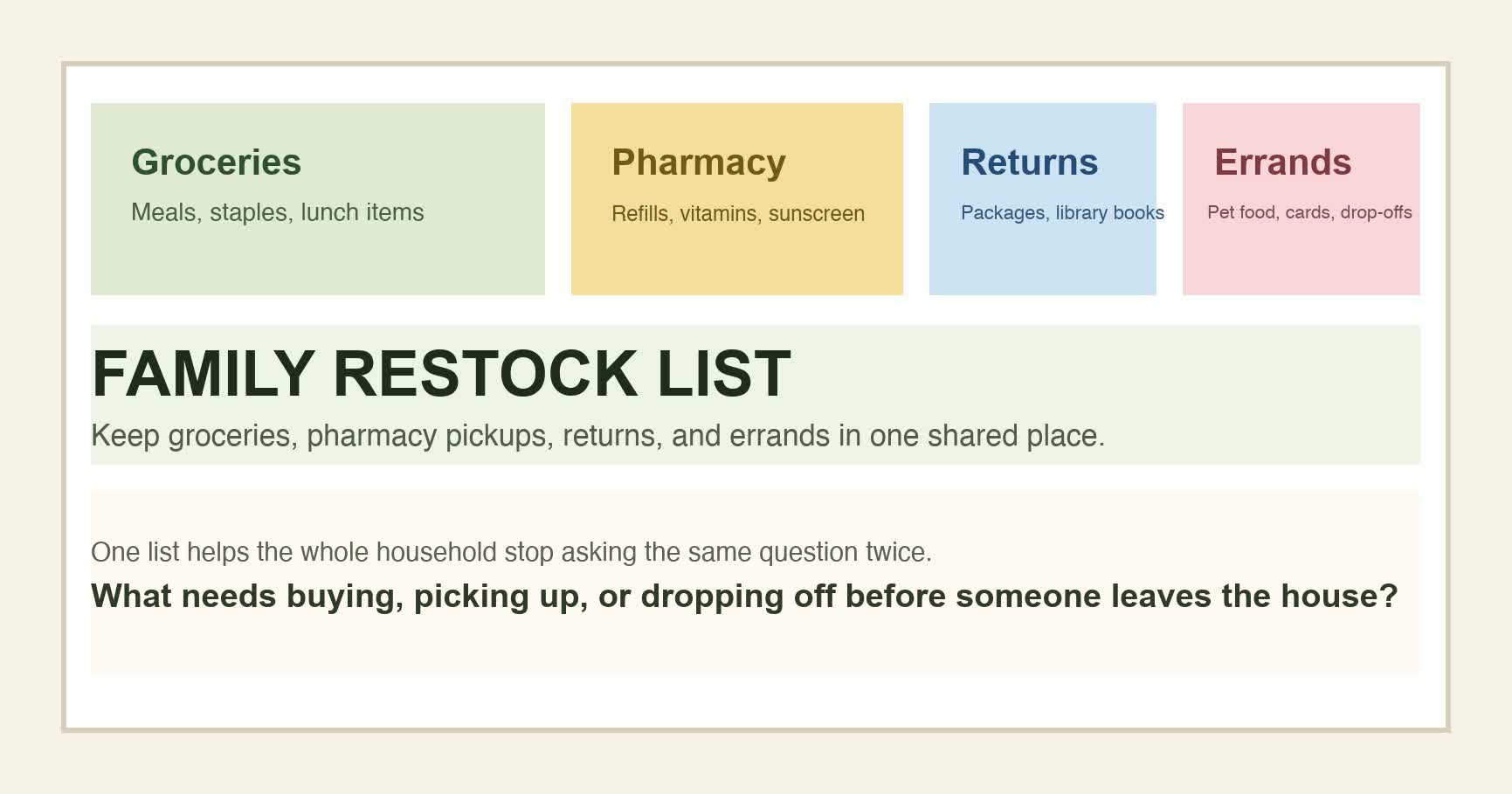
A practical family restock list that combines groceries, pharmacy pickups, returns, and errands so the household can stop running the same trip twice.
Published 2026-06-15 · Updated 2026-06-15 · By Buildday LLC
Quick answer
A useful family errand list should combine groceries, pharmacy pickups, household restocks, returns, and stop-specific notes in one shared place. The goal is not a perfect shopping system. The goal is to reduce forgotten pickups, duplicate trips, and the mental load of remembering what each stop was for.
Best for
- Families trying to combine groceries, returns, and household pickups into one trip
- Couples who are tired of last-minute texts about what to buy or return
- Households that need a simple weekly restock routine instead of separate apps and notes
Not for
- People looking for route optimization or delivery-driver software
- Families who want a full meal-planning or recipe database
- Households that only need a private one-person shopping list
Most errand stress comes from splitting one trip into five systems
A grocery run is rarely only a grocery run. It is also the toothpaste someone noticed was low, the prescription that is ready, the package that needs returning, the birthday card you forgot to buy, and the library books still in the trunk.
When each of those details lives in a different place, one person becomes the household memory system. A family errand list works better when it combines the real trip into one shared view.
Use one family restock list with clear sections
Keep the list broad enough to reflect real life, but simple enough that anyone in the household can add to it quickly. Start with sections that match the stops your family already makes most weeks.
| Section | What belongs there | Example items |
|---|---|---|
| Groceries | Weekly food, lunch, and staple items | Milk, tortillas, berries, cereal |
| Household | Things that keep the home running | Detergent, trash bags, paper towels |
| Pharmacy | Pickups and personal-care restocks | Prescription refill, vitamins, sunscreen |
| Returns | Anything that must leave the house | Amazon return, library books, borrowed dish |
| Errands | Stops outside the main store | Pet food, dry cleaning, birthday card |
| Need context | Items that need a note before someone can finish them | Use store credit, ask for unscented version |
Separate what to buy from what to carry, drop off, or ask
One reason errand lists feel messy is that 'buy eggs' and 'bring back the shoes' are not the same kind of task. Keep them on the same master list, but make the job type obvious so another person can take over without extra texting.
| Bucket | Use it for | Example |
|---|---|---|
| Buy | Items you need to purchase | Coffee filters, applesauce pouches |
| Pick up | Orders or refills that are ready | Pharmacy refill, curbside order |
| Drop off | Things that must leave the house | Return package, donation bag |
| Check | Items that need confirmation | See if camp shirt still fits |
Build the list before the trip is urgent
The best family errand list is built throughout the week, not in the car. As soon as someone notices low wipes, an empty printer-paper shelf, or a prescription text, it should go into the shared system.
Then use a short weekly reset to scan the fridge, pantry, bathroom, school area, and return pile. That five-minute check catches the small items that usually create the second trip.
- Check staples before planning the next store run
- Add pharmacy and return items as soon as the alert comes in
- Keep a visible 'leave the house' section for returns and drop-offs
- Assign time-sensitive pickups as tasks if one person owns the stop
Why Pistachio fits grocery and errand coordination
Competitors like AnyList are strong when the main job is grocery shopping and meal planning, while Cozi centers family coordination around calendars, shopping lists, and to-dos. Google Keep can handle simple shared lists, but its help docs still describe a lightweight note-and-checklist workflow rather than a purpose-built household system.
Pistachio fits the middle: one shared place for groceries, errands, returns, chores, and notes without asking the household to adopt another calendar. That is often the simpler answer when the real problem is follow-through, not event scheduling.
Frequently asked questions
What should be on a family errand list?
A family errand list should include groceries, household restocks, pharmacy pickups, returns, and any stop-specific notes someone needs to complete the trip without extra follow-up.
How do you organize groceries and errands together?
Use one shared master list with clear sections such as groceries, household, pharmacy, returns, and errands. Keep the sections simple so anyone can add items quickly.
Can Pistachio be used for grocery and errand planning?
Yes. Pistachio can be used for shared grocery lists, household restocks, errand notes, returns, chores, and pickup-related tasks in one place.
Pistachio topics
Build the rest of your family system.
Try Pistachio for shared family lists and tasks.
Pistachio is free on iOS and built for shared grocery lists, household tasks, chores, and notes your family can actually use.
Download Free on the App Store